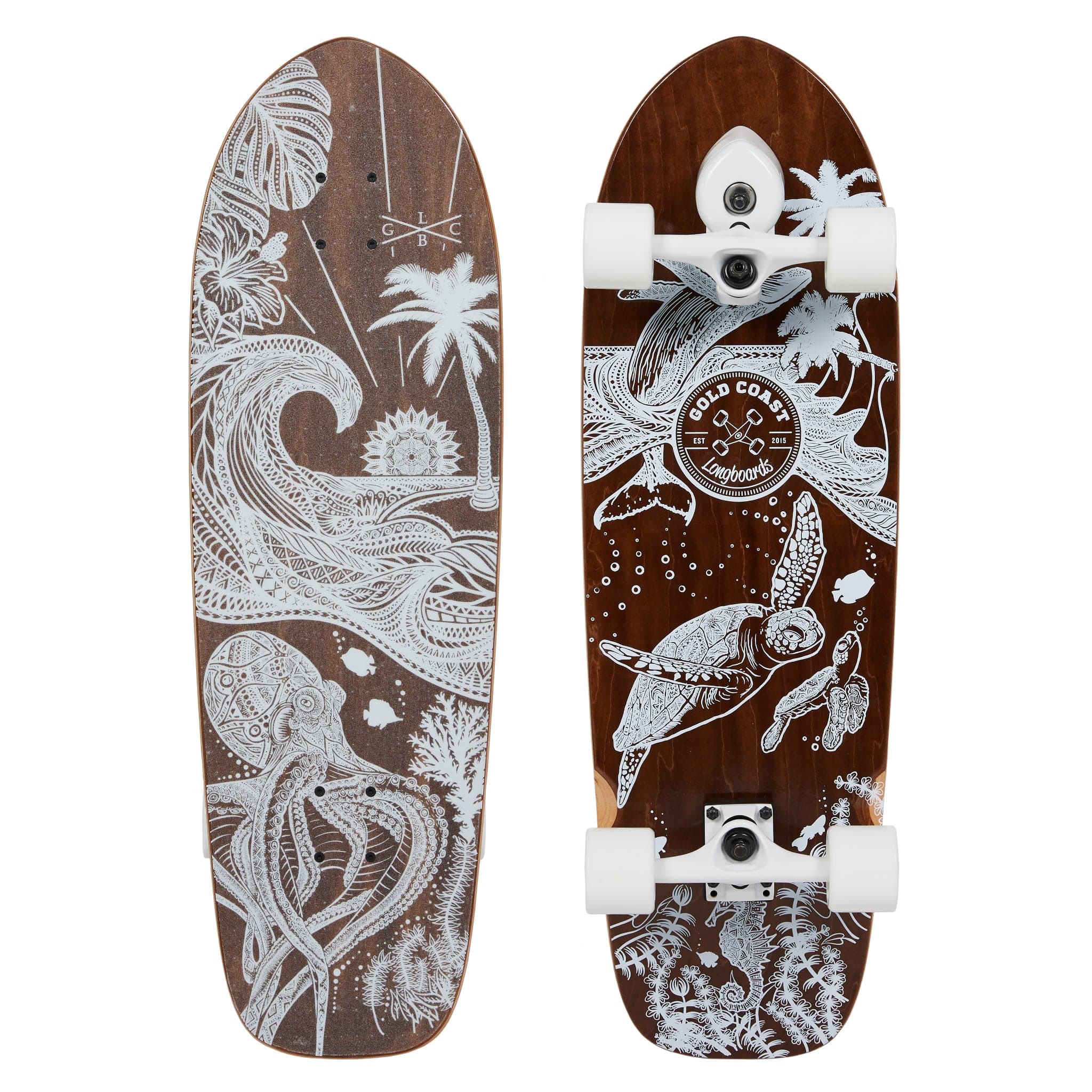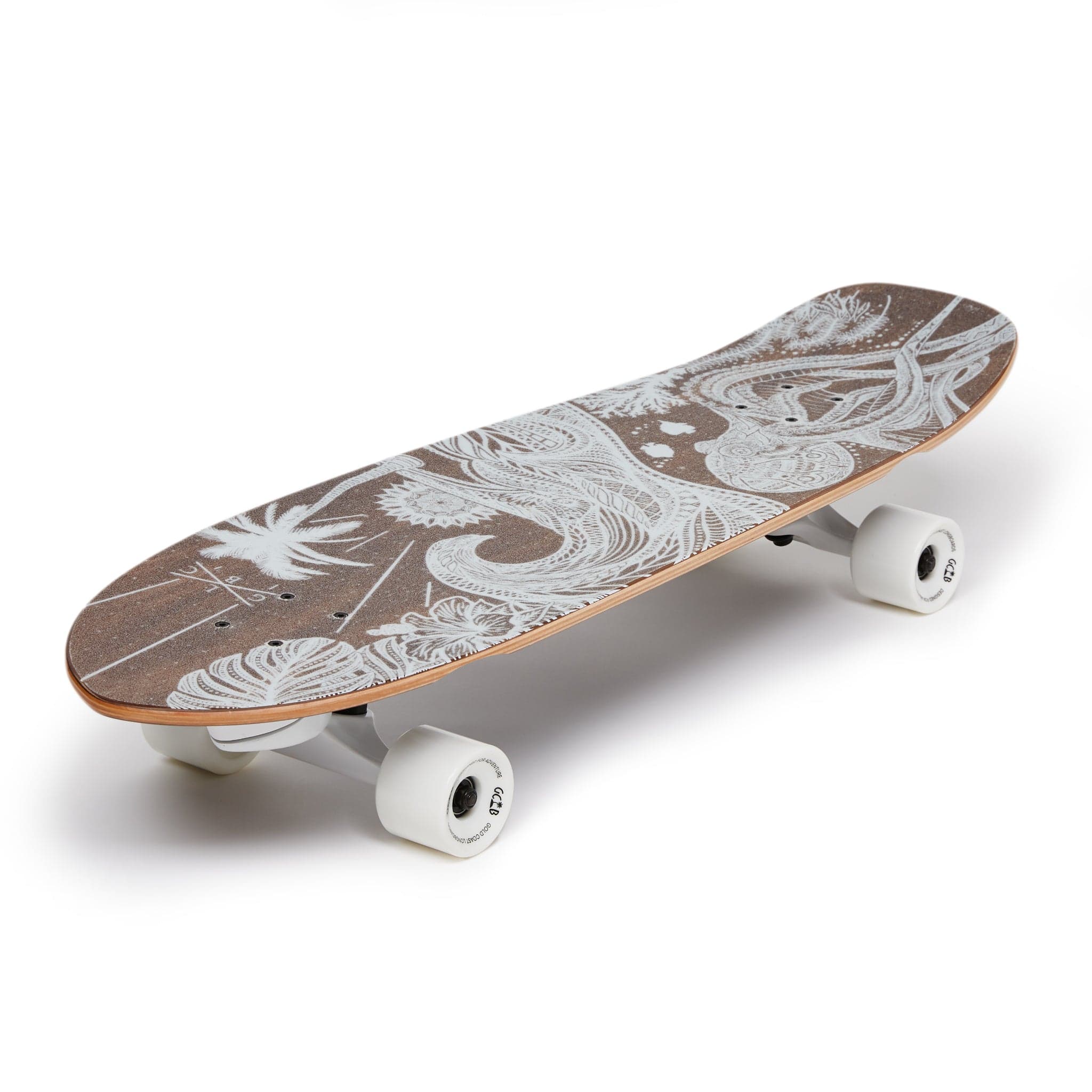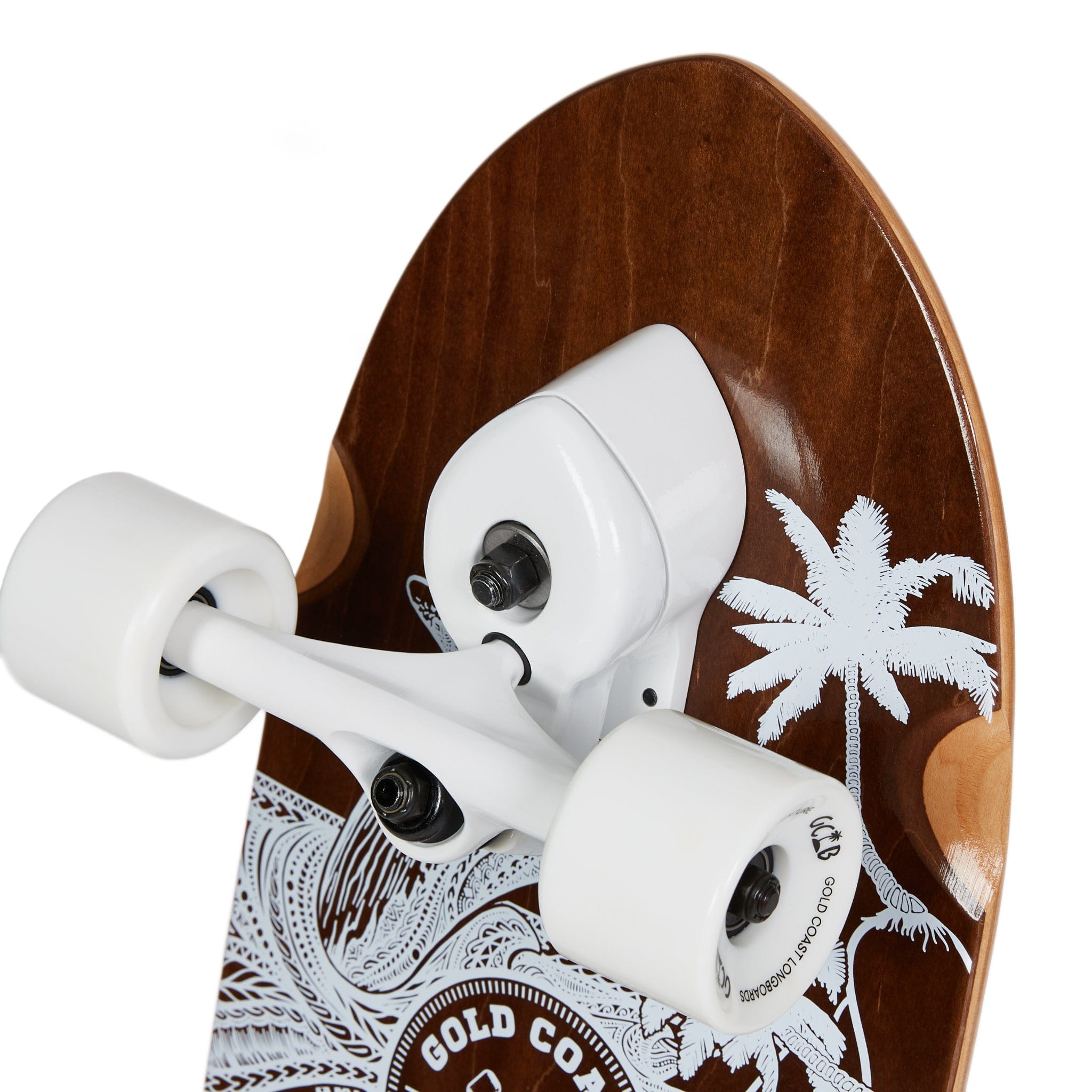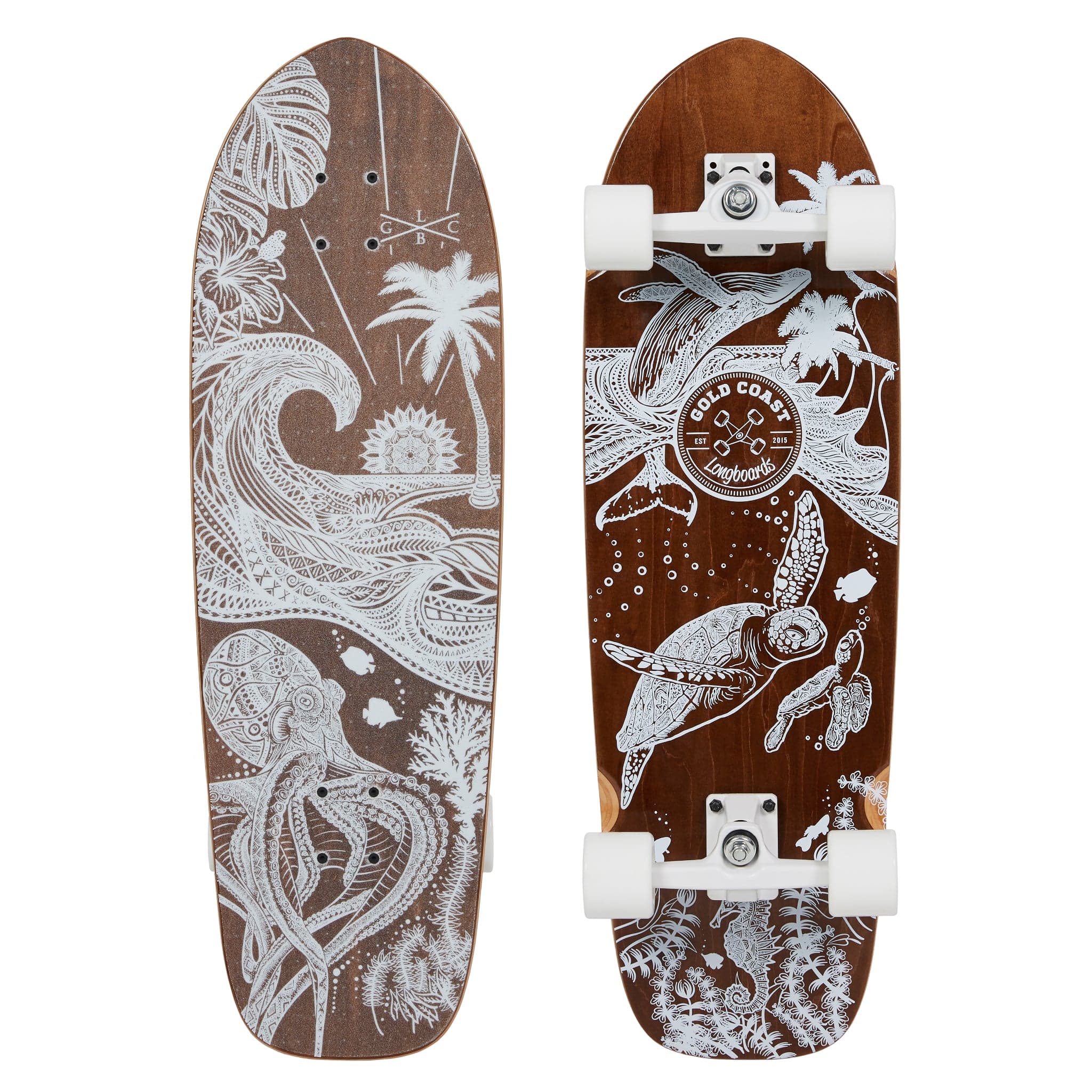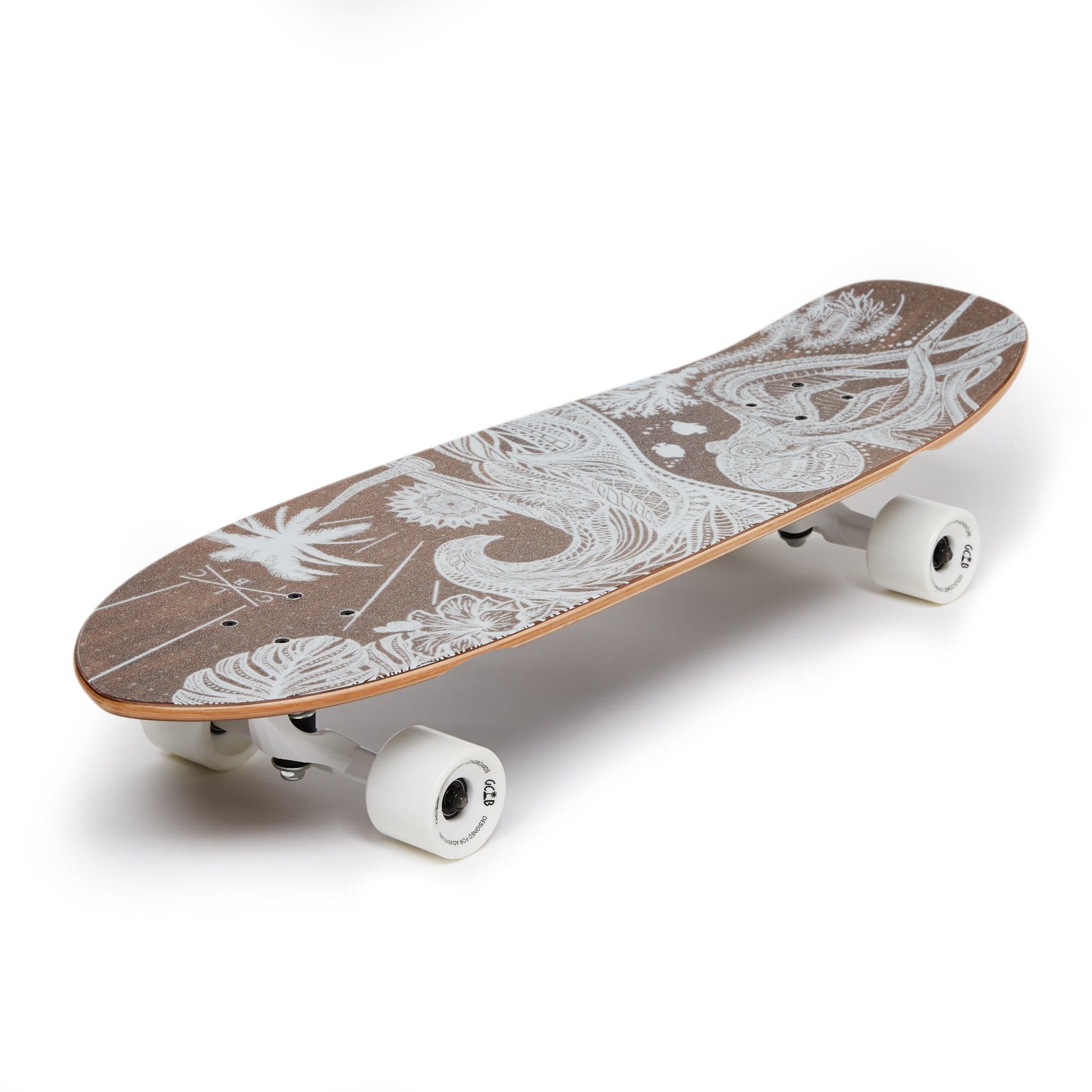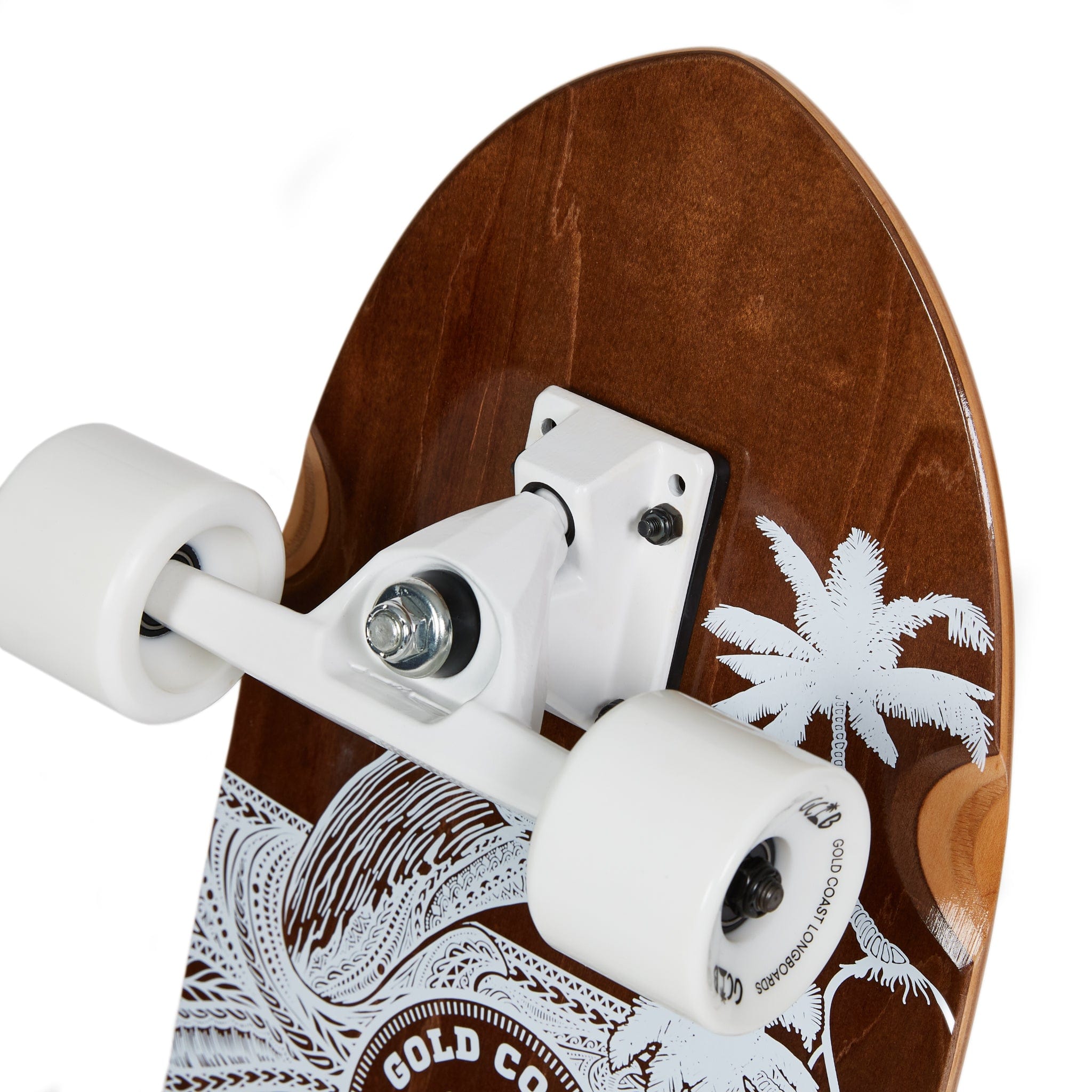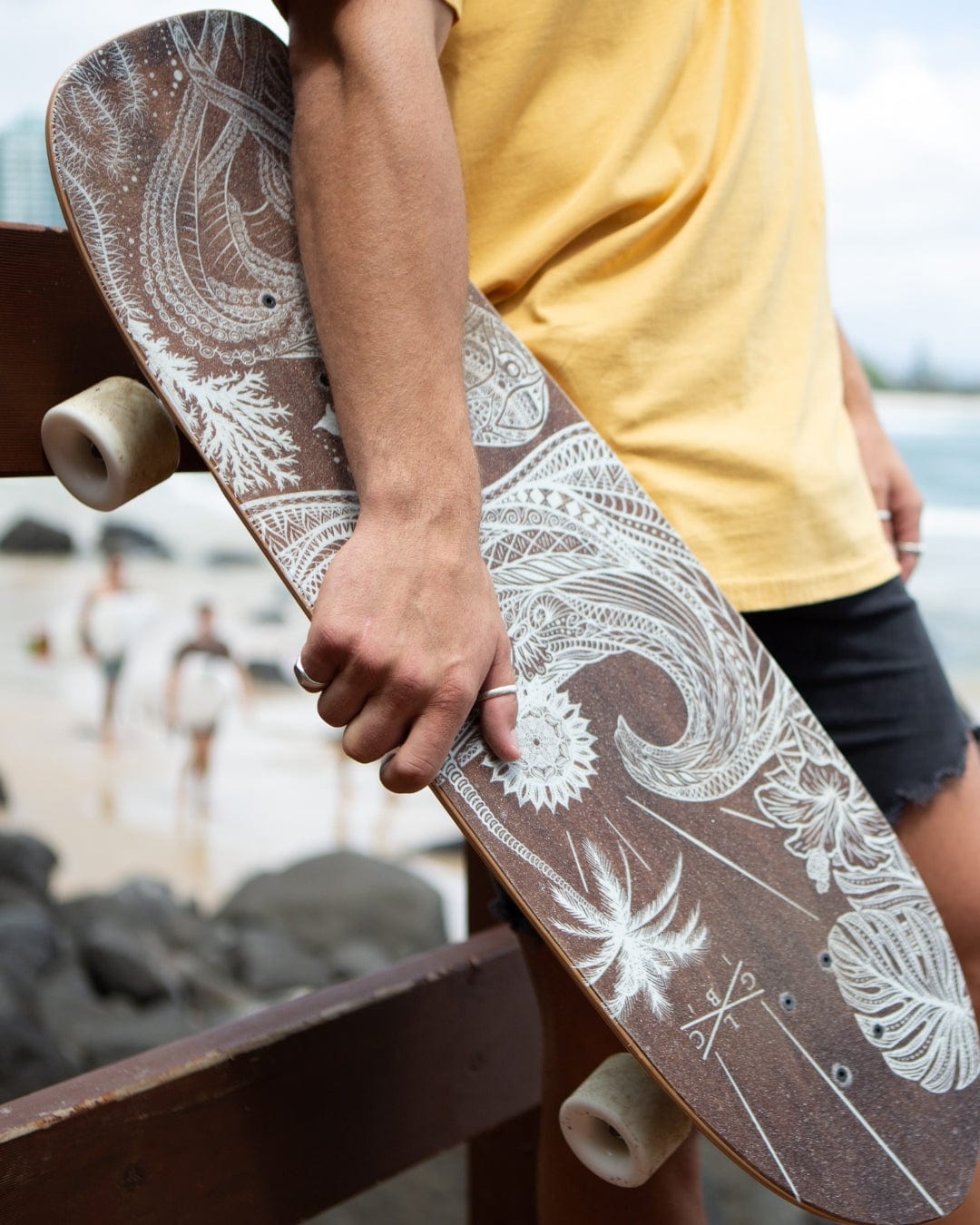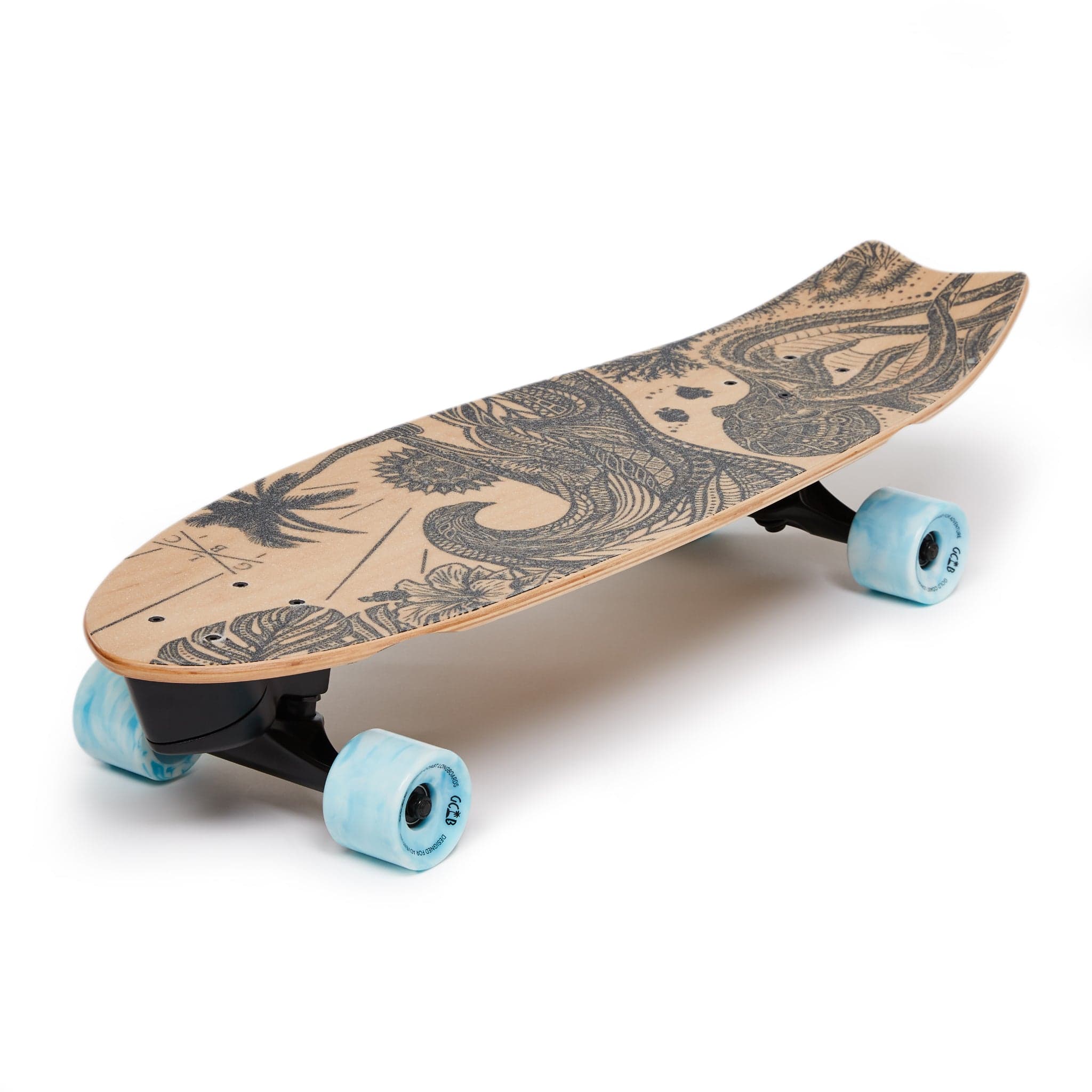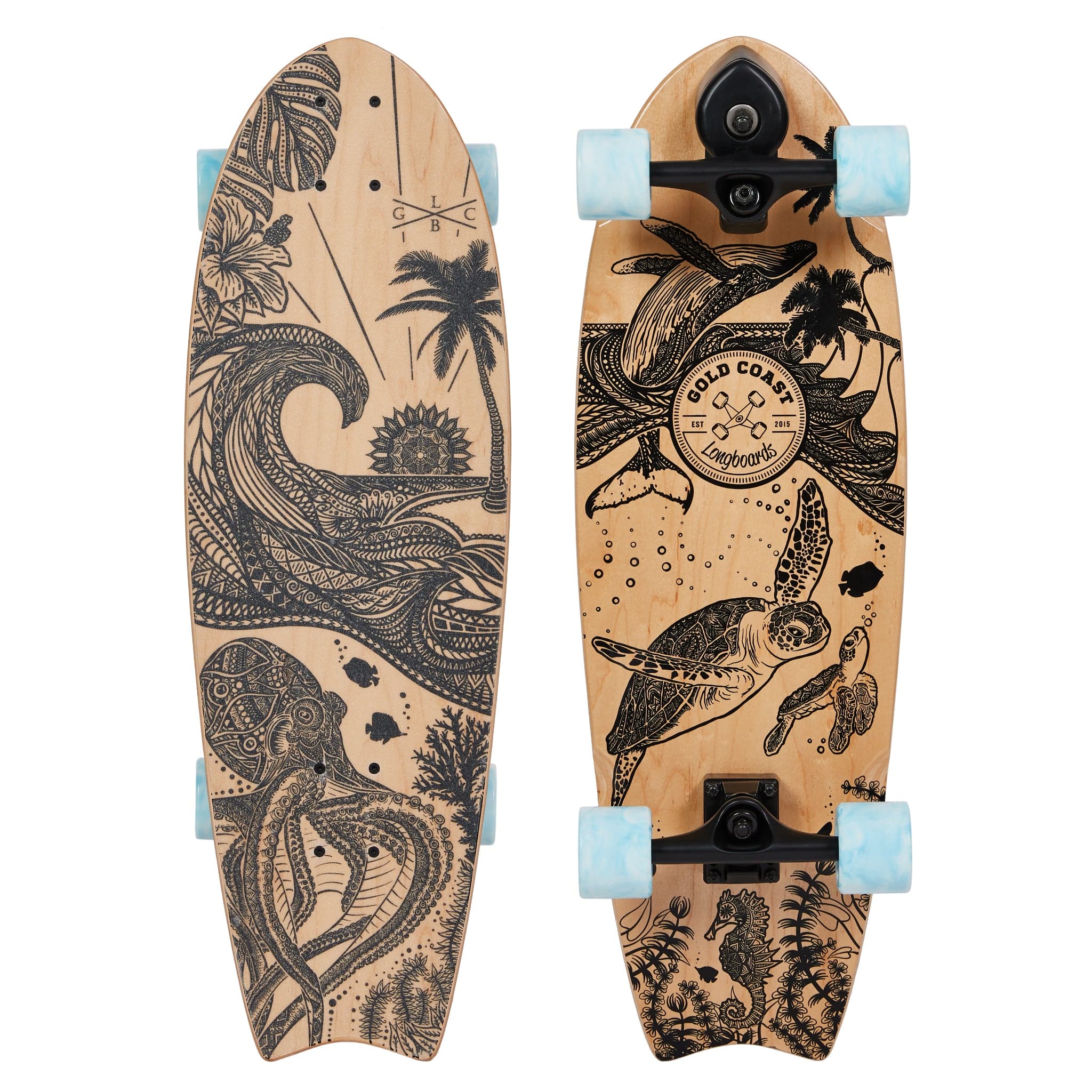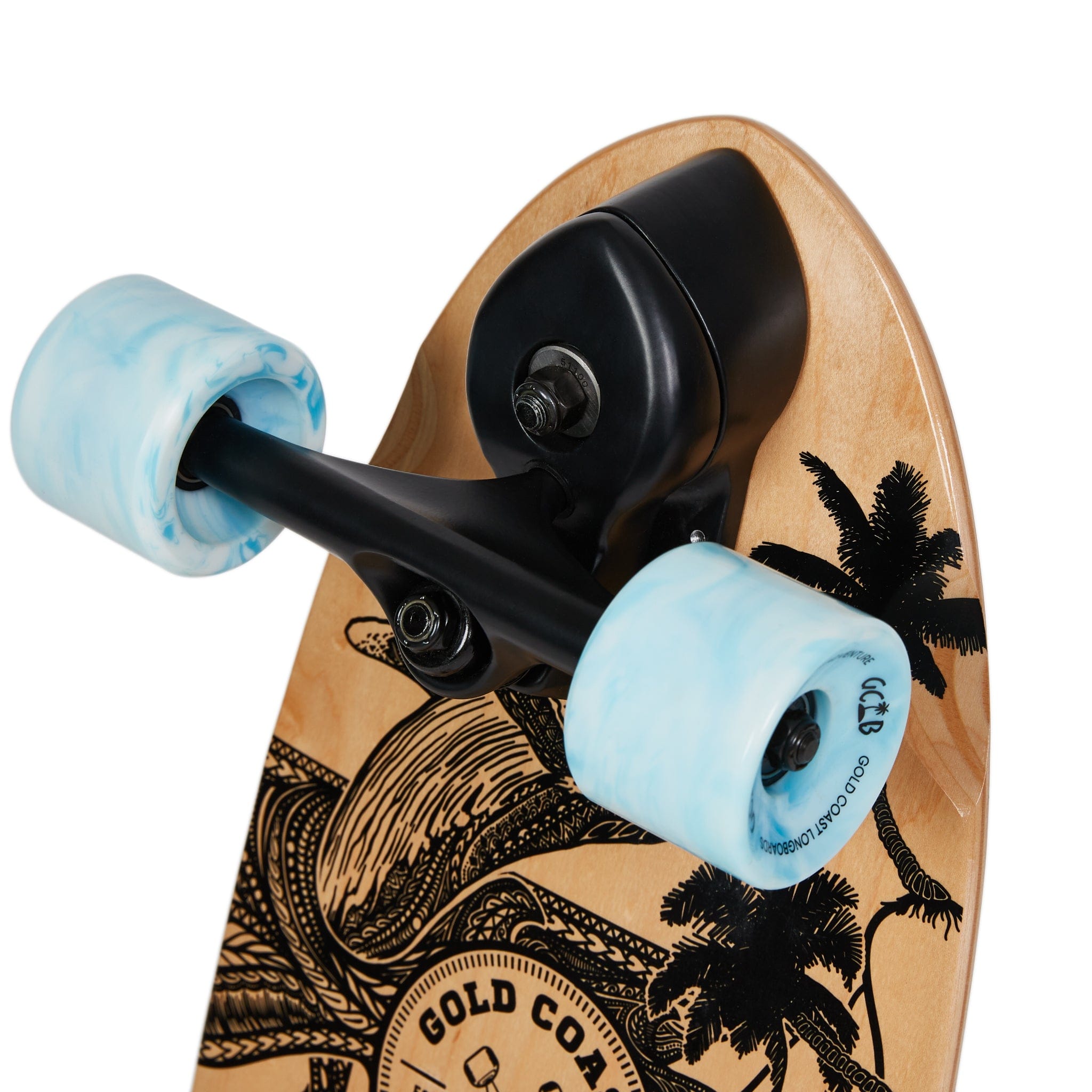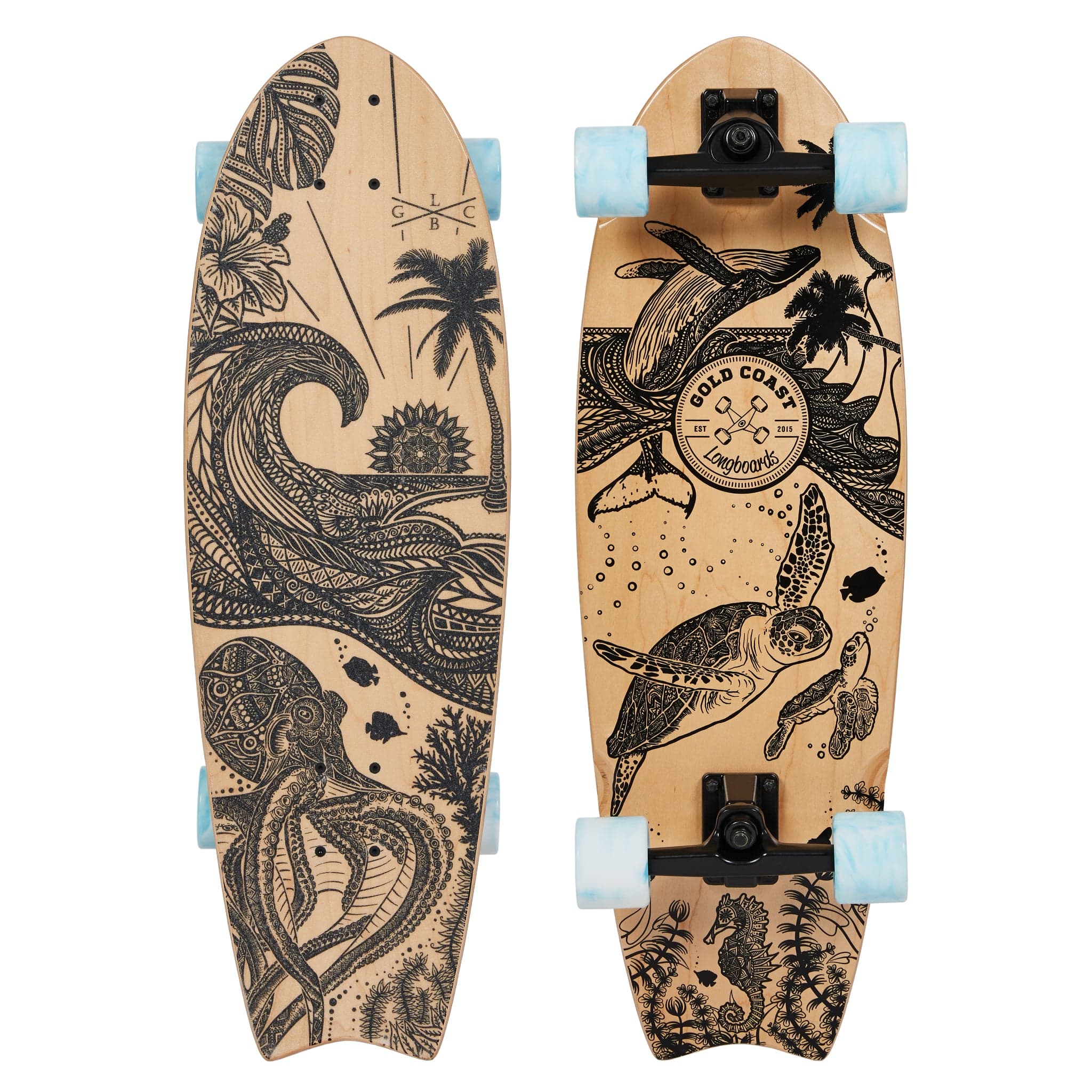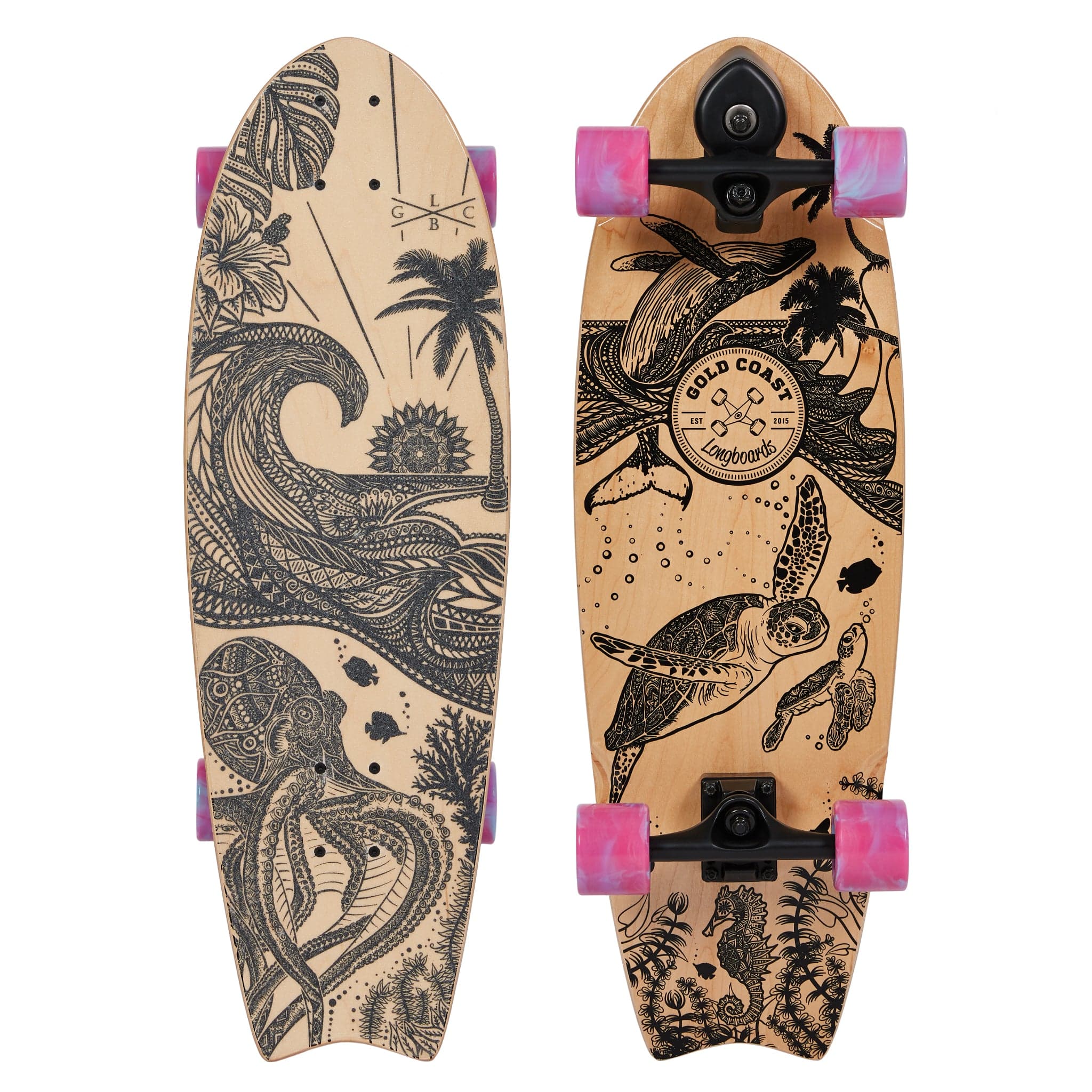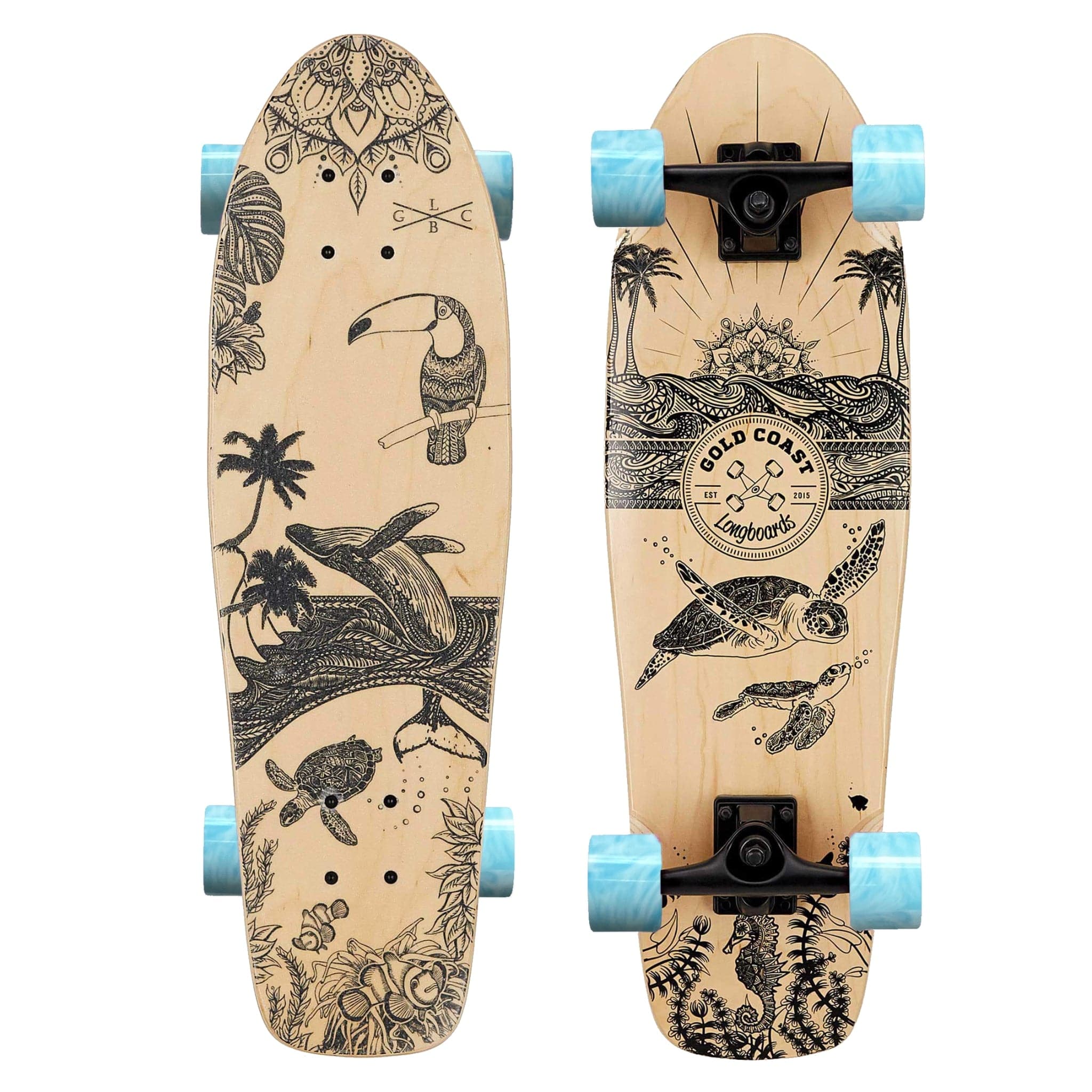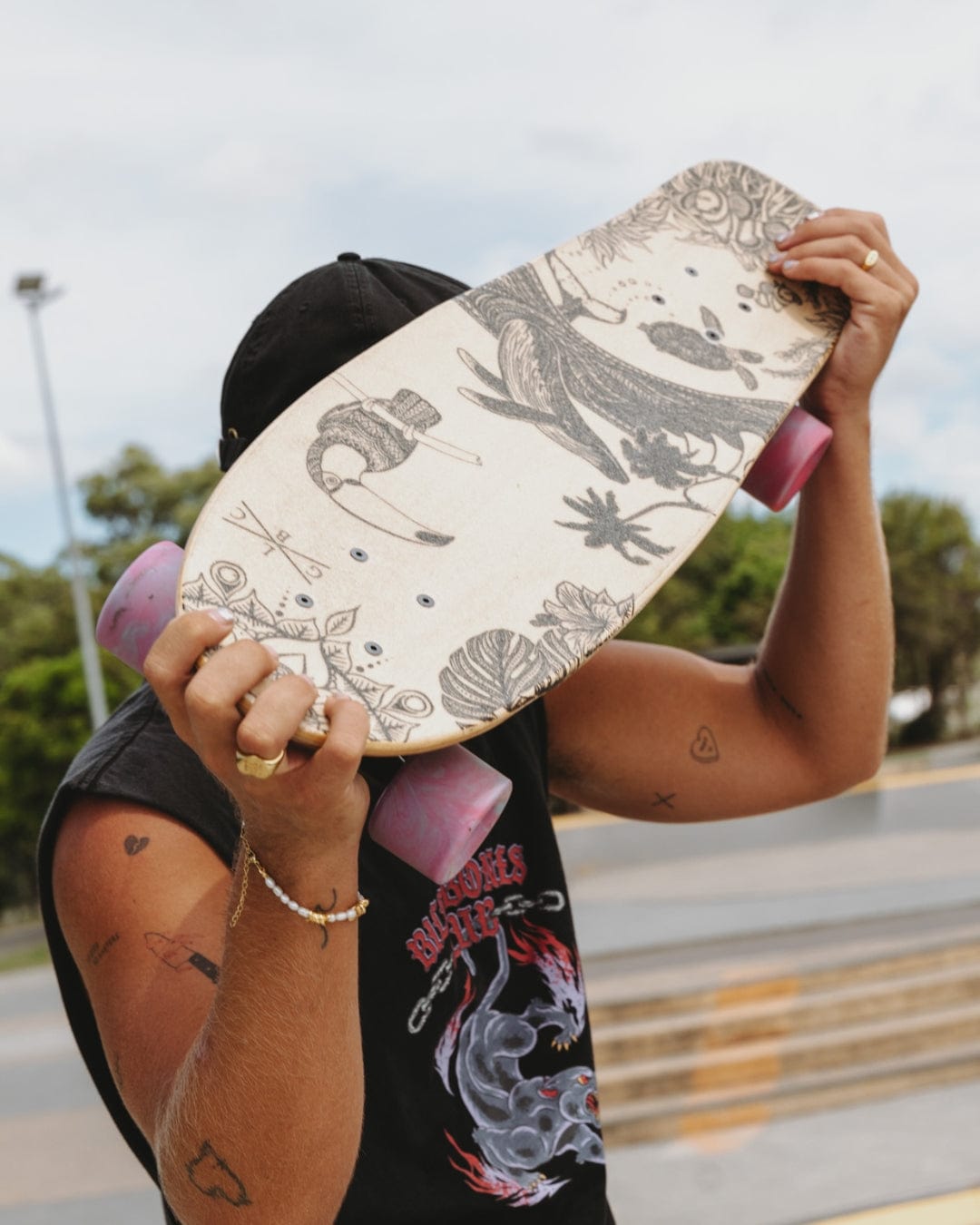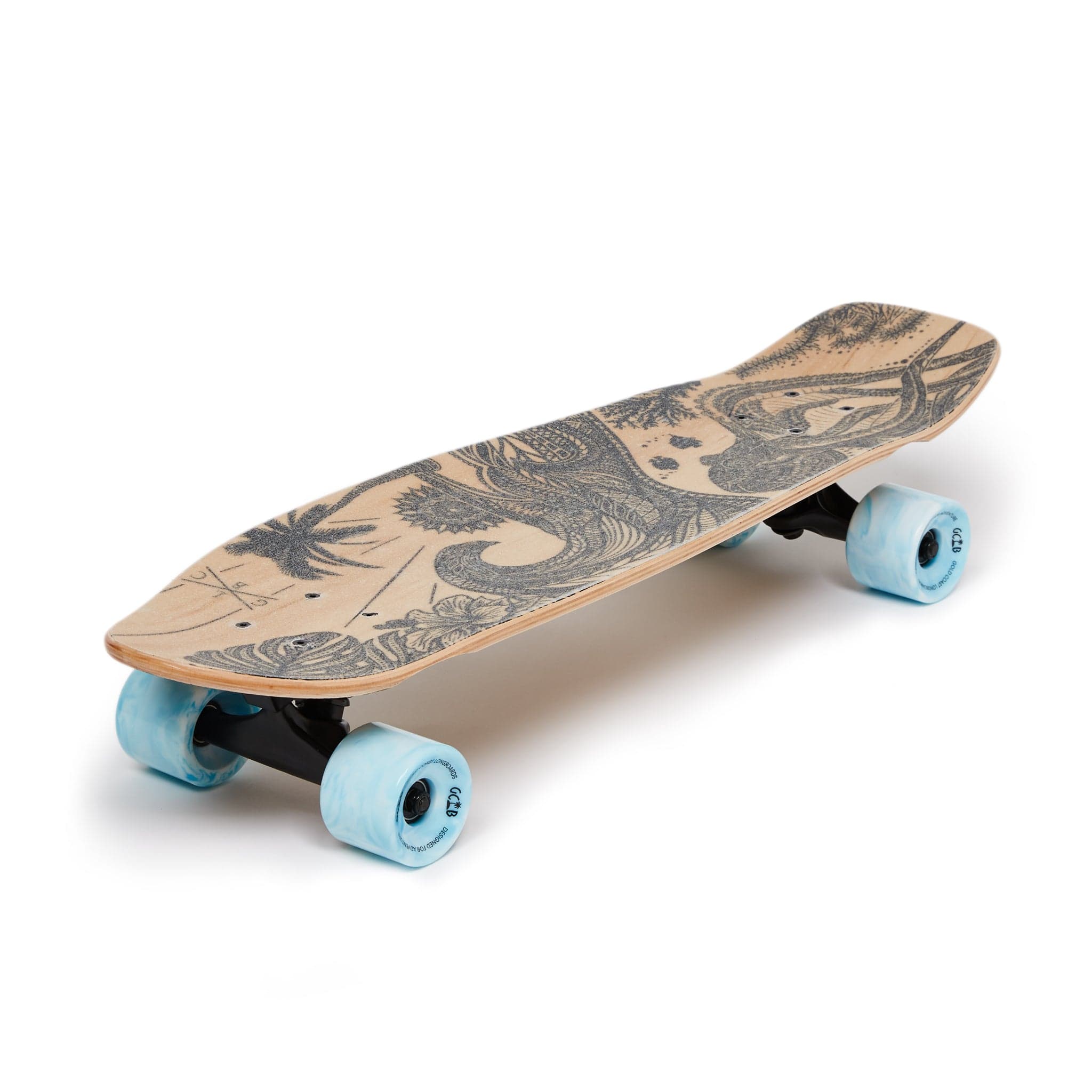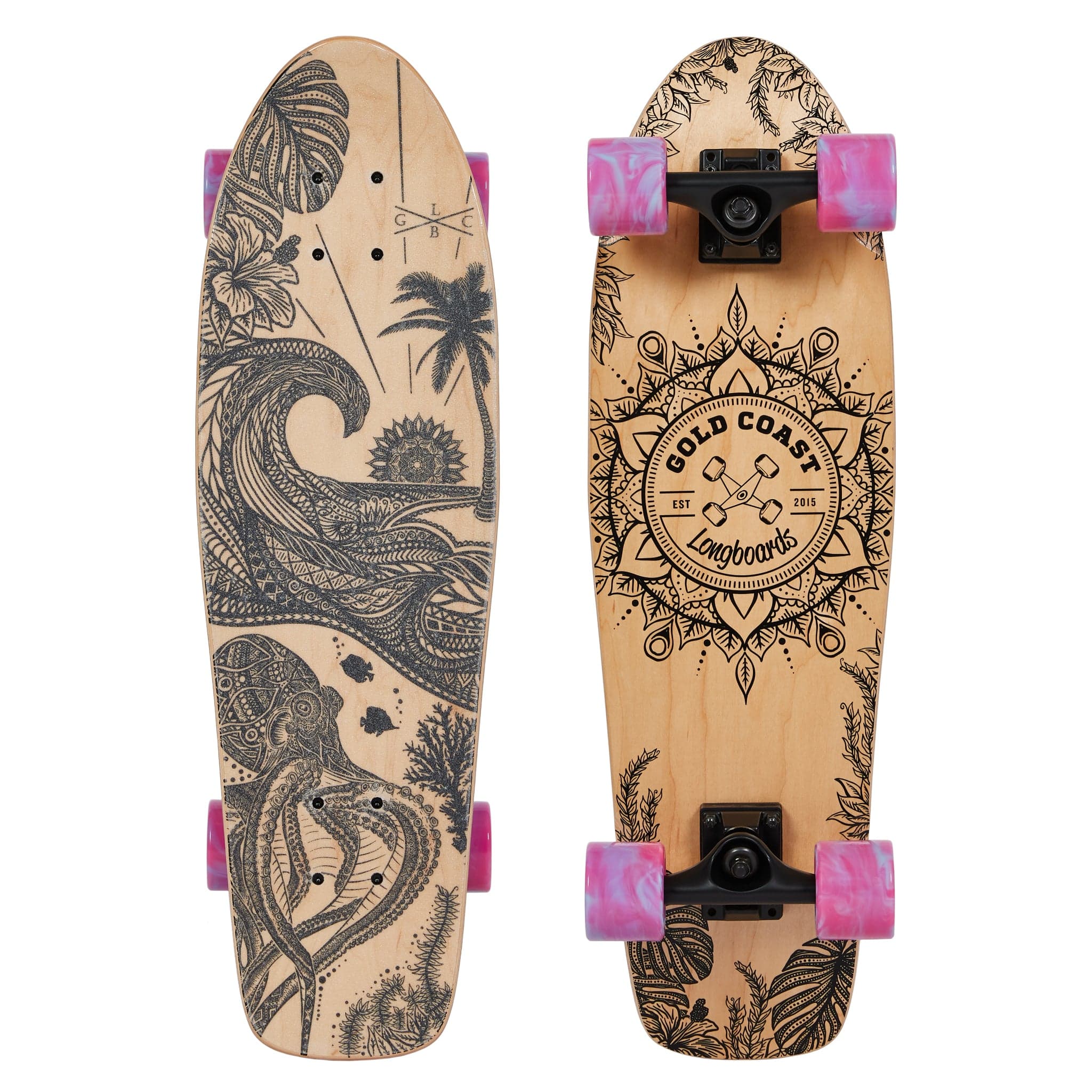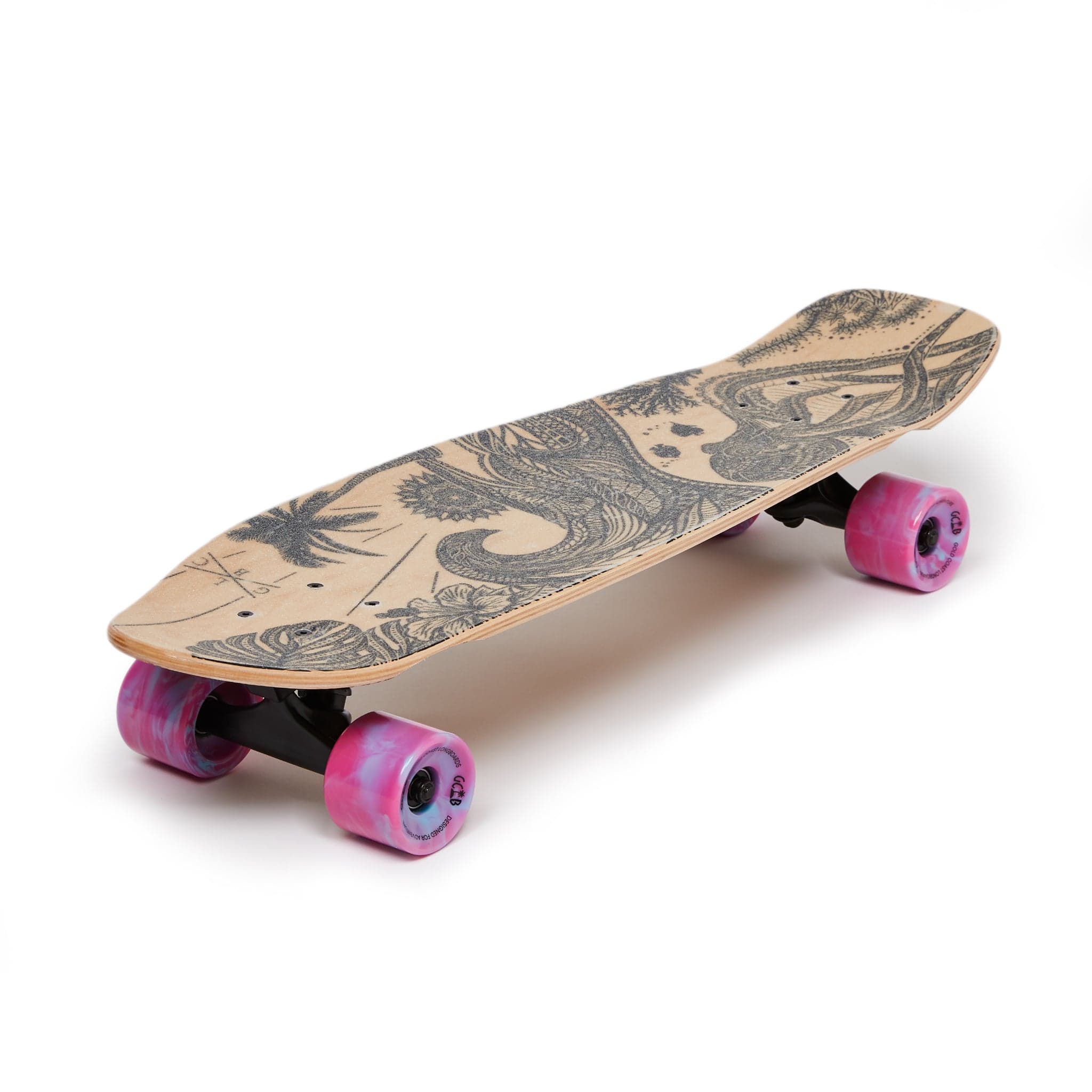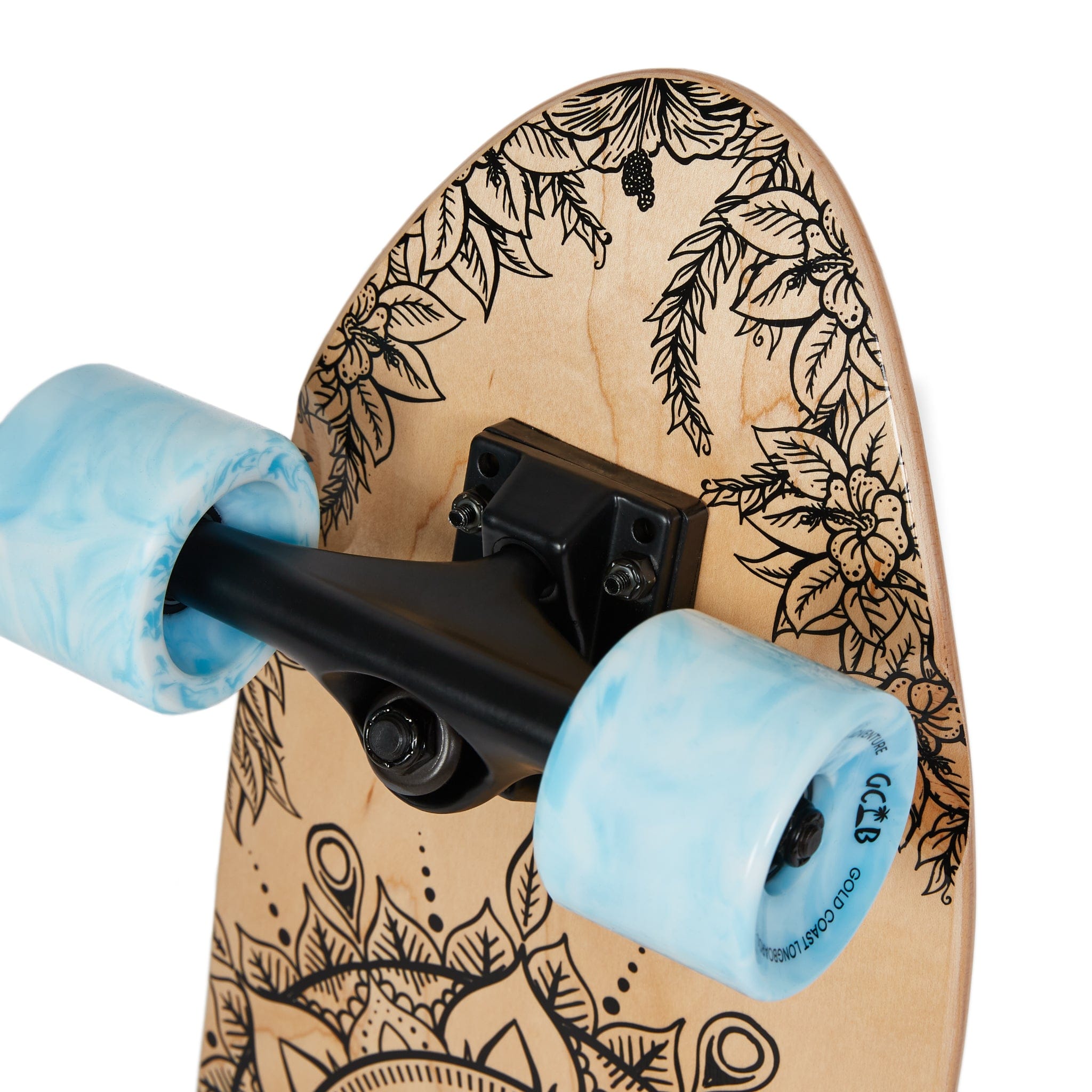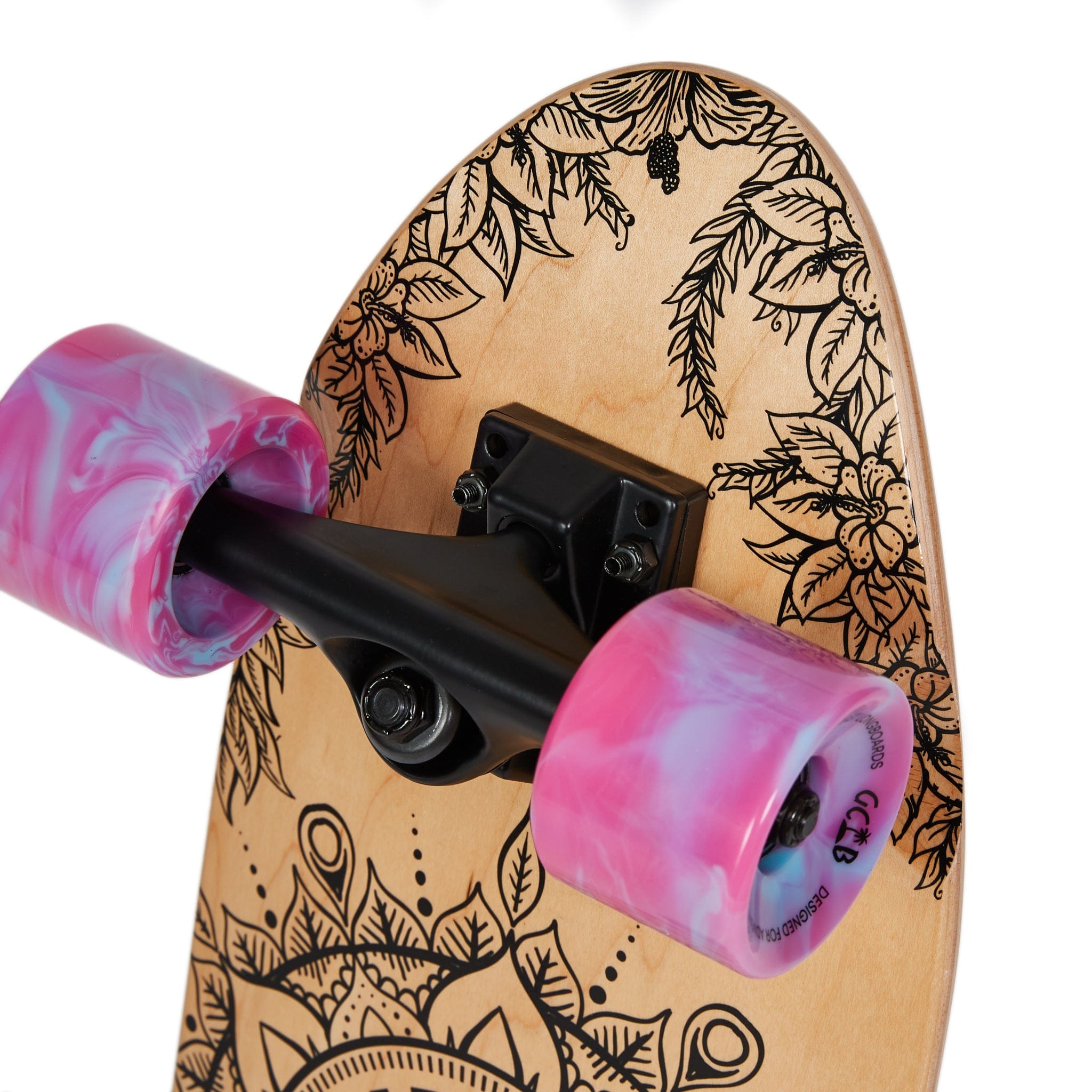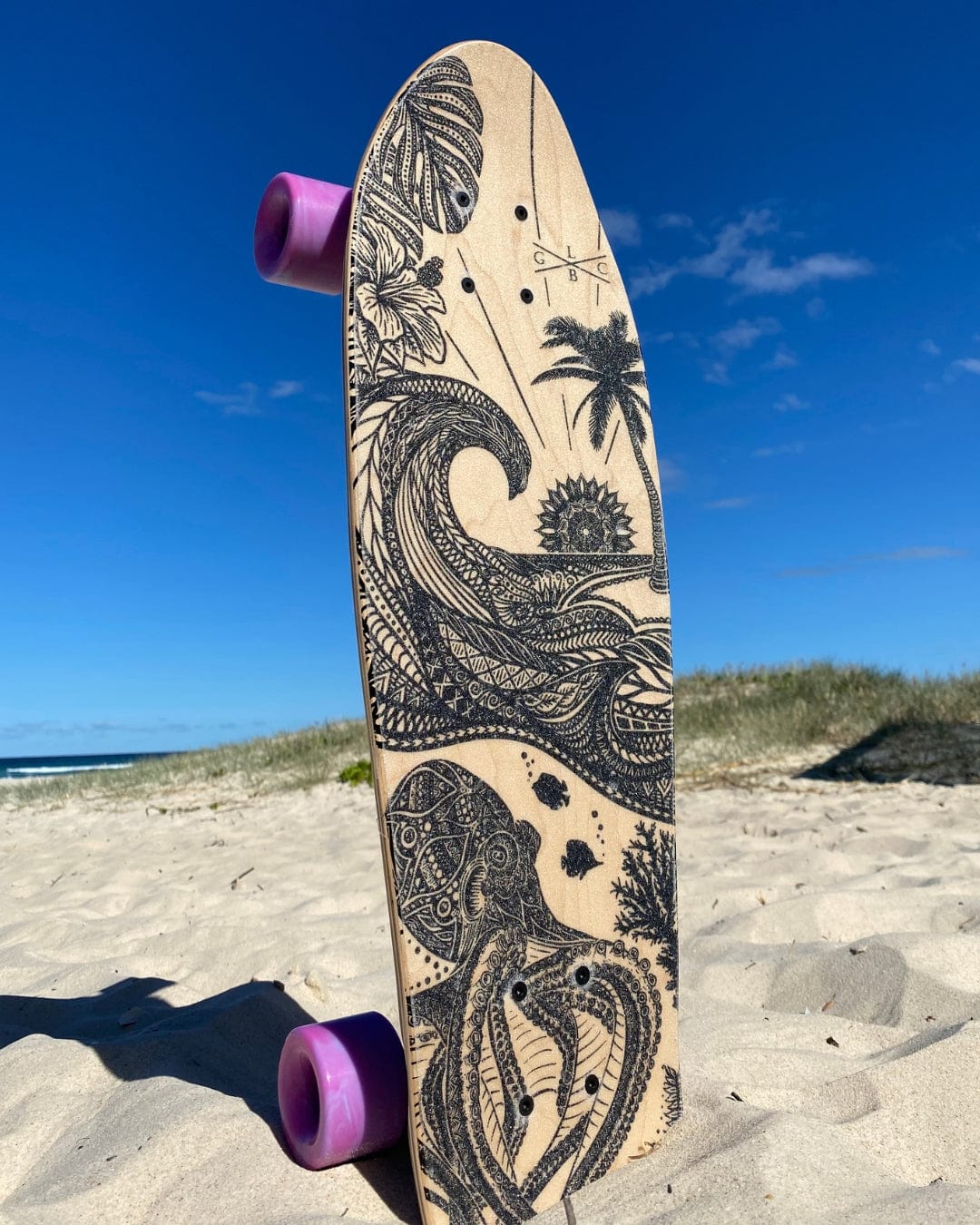









A dusty deck does not need a bath. For a wooden skateboard, cruiser, longboard or surf skate, everyday care starts with keeping water out, removing loose dirt and noticing anything that has changed.
This guide covers surface cleaning, storage and simple checks—not repairs or truck tuning. You do not need to take your board apart to start looking after it. And a cleaner-looking board is not proof that a damaged part is safe to ride.
1. Look over the board before you head out
Make the check part of getting ready, alongside your helmet and protective gear. In good light, look at:
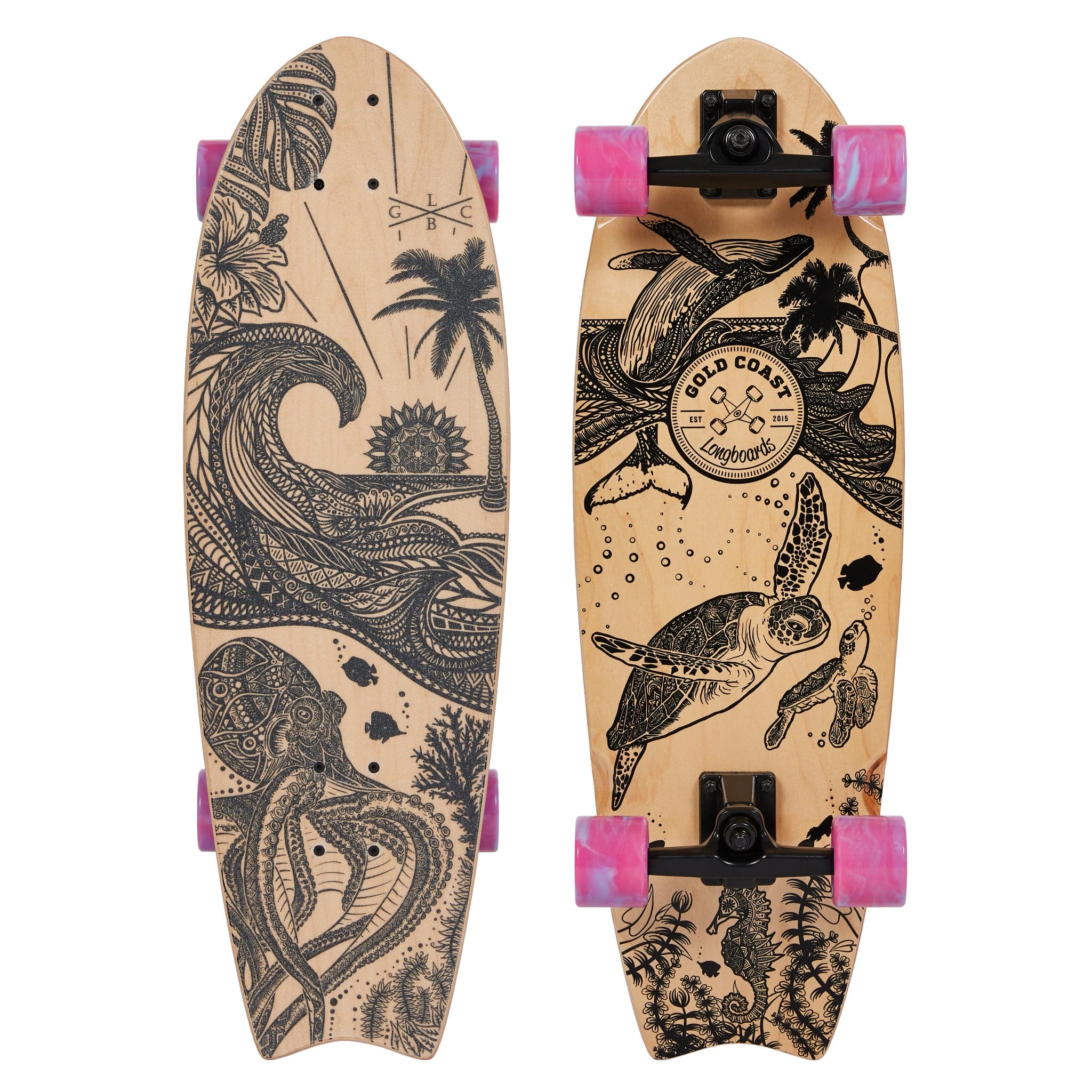
- The deck: cracks, splinters, separating wood layers or damage around the truck mounts.
- The fittings: missing fasteners, visibly loose parts or damaged components.
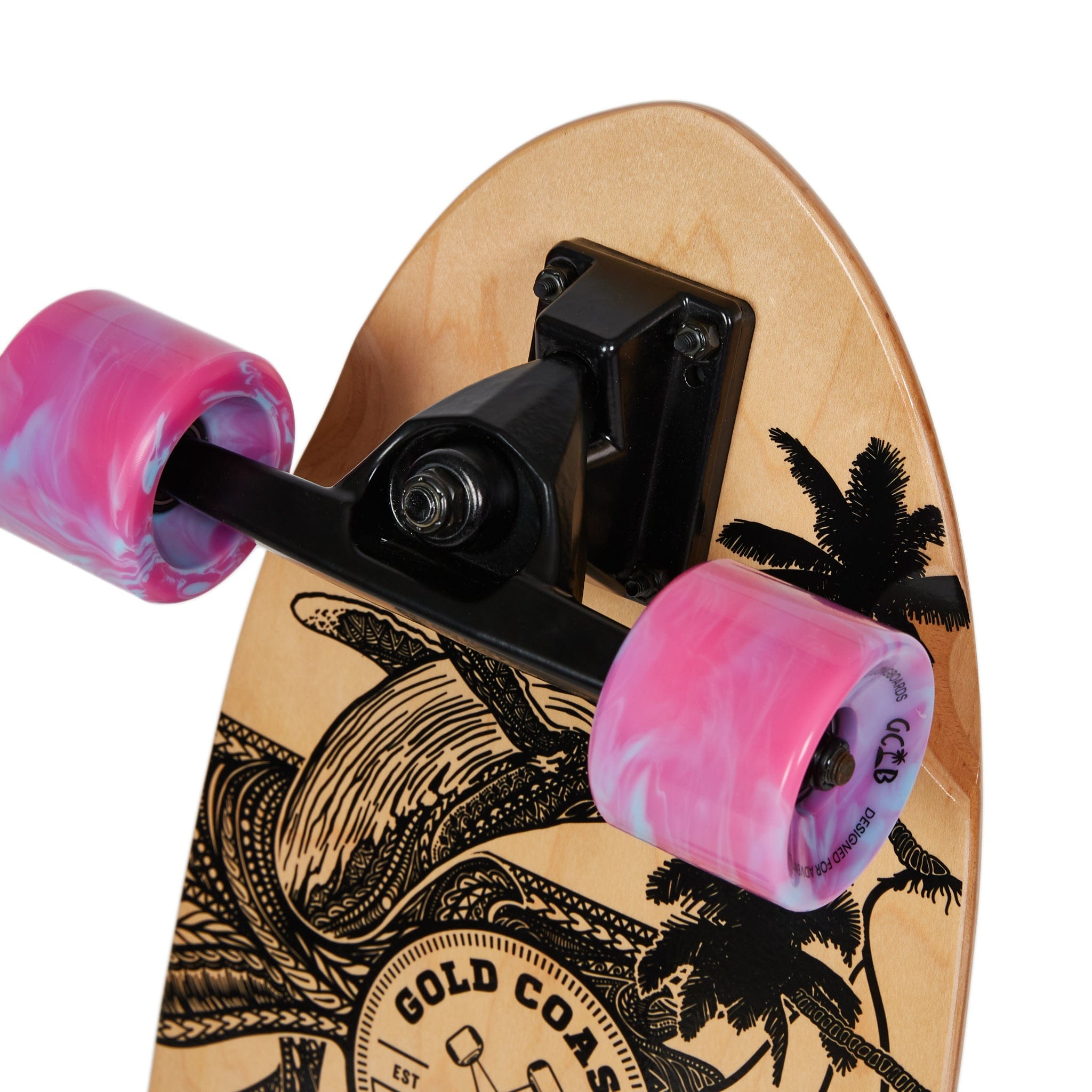
- The wheels: debris, damage or uneven wear. With the board securely supported and nobody standing on it, check that each wheel can turn without binding.
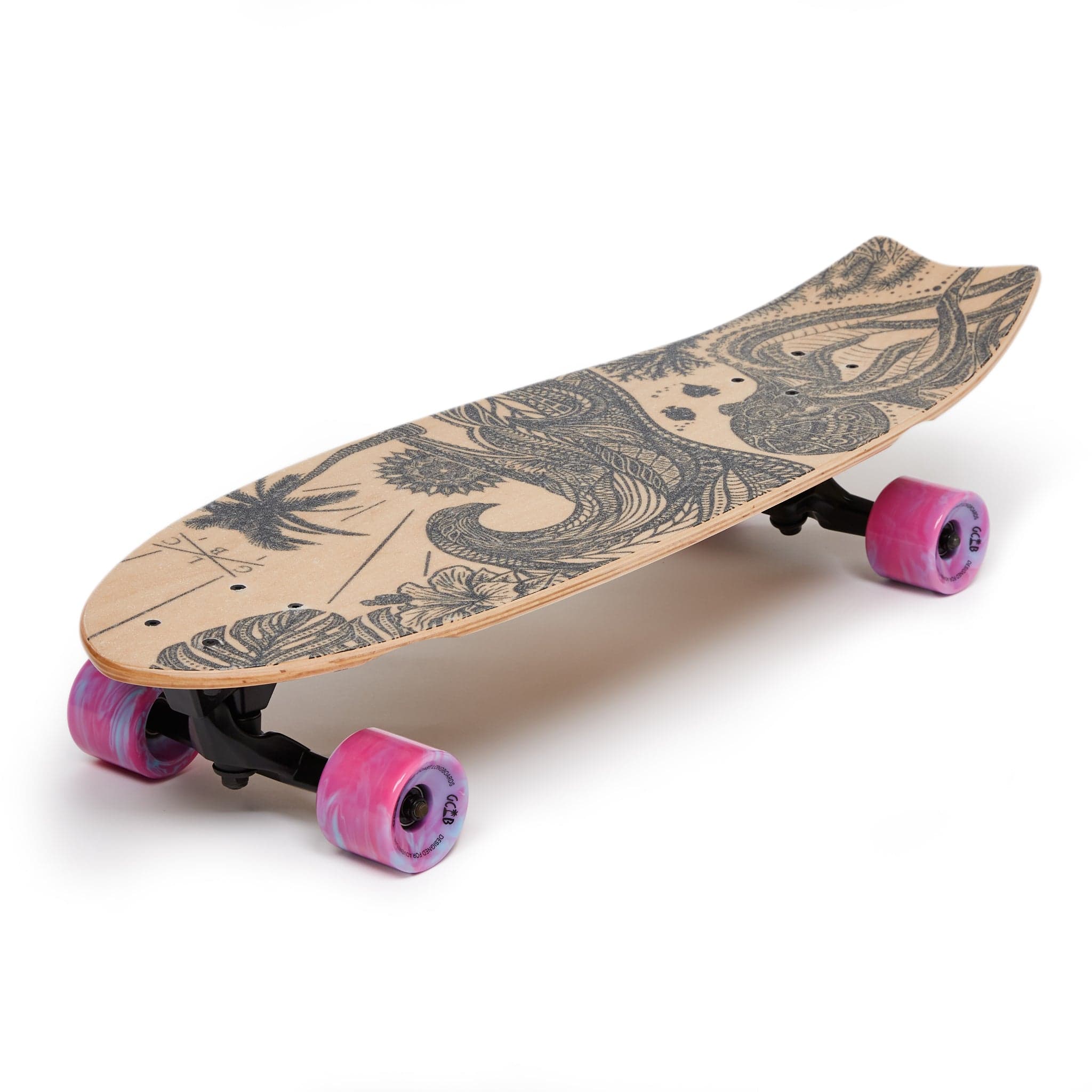
- The grip: loose, peeling or smooth worn areas where your feet sit.
Regular component checks are also part of NHS’s skateboard care guidance. If something looks wrong, set the board aside. Do not guess at bolt tightness or assume another brand’s adjustment instructions suit your setup.
2. Clean the surface without soaking it
Give yourself a clear workspace and keep the board from rolling. For an everyday surface tidy, have a clean, dry cloth and a grip-cleaning bar ready. Wipe away loose dust from the underside and accessible external surfaces; leave internal bearing cleaning for a separate, model-appropriate service.
For ordinary dirty grip tape, the GCLB Grip Tape Cleaner is a dry-cleaning option. Our product directions are straightforward:
- Start with dry grip tape and remove loose surface debris.
- Rub the cleaning bar along the length of the deck, using firm pressure.
- Clear away the lifted debris and check the result.
The cleaner may not remove deeply embedded debris. It also cannot put worn-away grit back. If the surface remains slippery or damaged, ask about the next step instead of scrubbing harder or adding a household chemical.
Skip the hose and soaking bucket. Loaded’s board-care guide recommends dry grip cleaning and explains that soaking the grip can send moisture into the wooden deck beneath it.

3. Deal with sand and unexpected moisture promptly
At the coast, separate the skate session from the beach gear: carry the board over sand and keep it away from wet towels and swimwear. A practical habit is to check your shoes before stepping onto the grip, rather than bringing beach grit along for the ride.
If the board gets wet, stop riding, move it somewhere dry and wipe off external moisture with a clean cloth. Do not rinse a complete wooden board to remove sand. Penny’s FAQ warns that both fresh and salt water can rust bearings and other components; its plastic-deck washing advice does not apply to a wooden GCLB deck.
Surface drying cannot confirm that the deck or bearings are undamaged. After significant soaking, or if anything swells, separates, binds or changes, get the board checked before using it again.
4. Give it a dry home between rides
Choose an indoor spot away from direct sunlight and heat. A board left in a hot car is not getting the same treatment as one stored at home: Loaded explains how moisture and heat can affect a wooden deck.
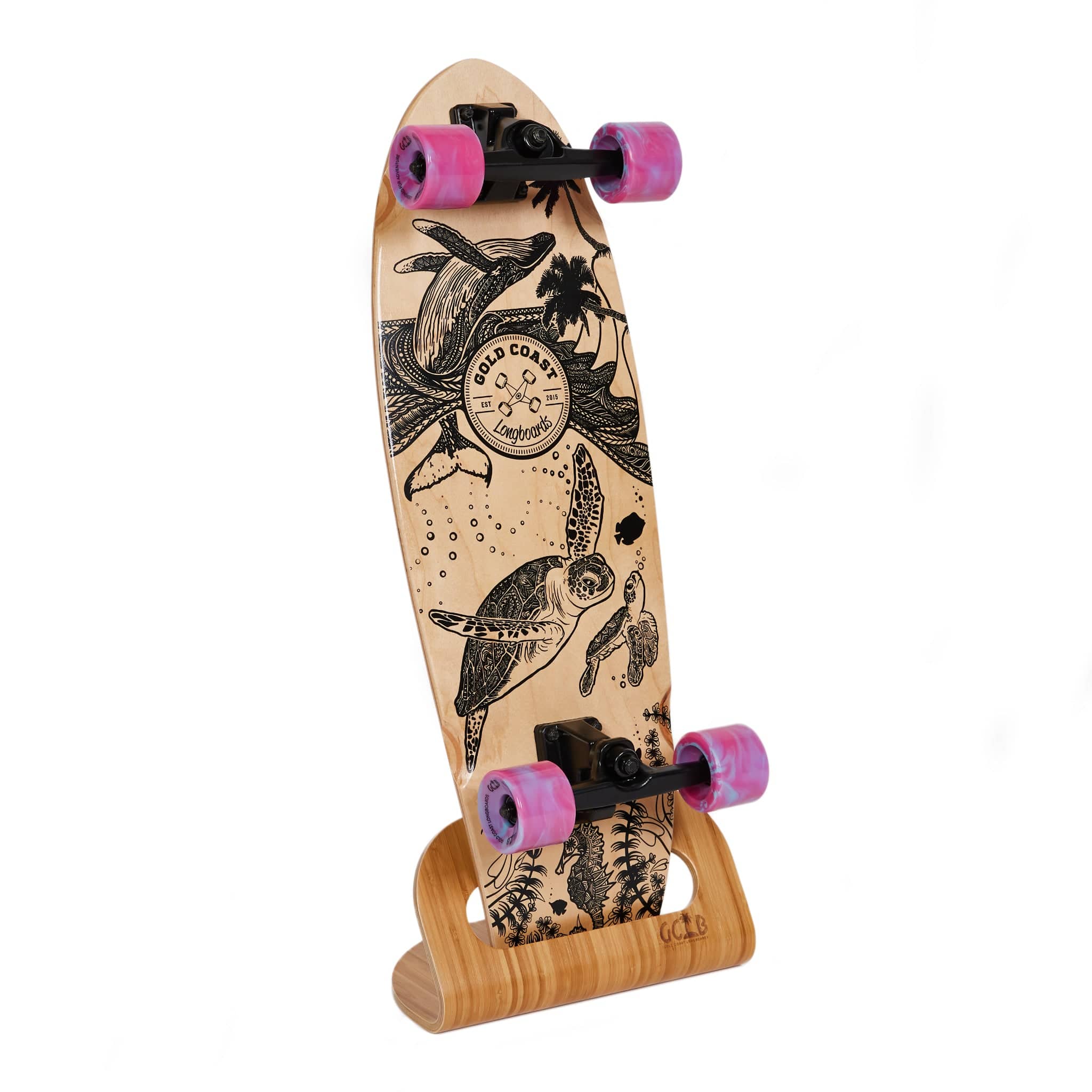
Keep it off wet floors and out of walkways. Use a stable storage position where it cannot roll into someone or topple when a door opens. If you put it in a bag, check that both the board and bag are dry first.
For a shared household, nominate one board spot. It makes the next pre-ride check easier and keeps the board separate from cleaning products, damp shoes and everything else piled near the door.
5. Know when cleaning is not the answer
A new grinding noise, a wheel that catches or noticeably changed steering deserves attention—not another lap to see whether it goes away. A noise alone does not identify the faulty part.
Bones Bearings warns against riding with bearings that do not turn freely. Adding oil to dirty bearings is not a cleaning shortcut either. This guide deliberately leaves bearing disassembly, solvents, lubrication choices and surf-skate mechanism servicing to instructions appropriate to the actual component.
For a GCLB board, contact us before riding again if you are unsure. Include the board model, a clear overall photo, close-ups of the concern and when you first noticed it. Photos help explain the issue; an in-person inspection may still be needed.
A simple routine you can keep
- Before riding: look over the deck, fittings, wheels and grip.
- After a dusty session: remove loose debris and clean the grip as needed.
- After unexpected water: stop, dry the outside and assess whether a service check is needed.
- Between sessions: return the dry board to its indoor spot.
This is an everyday habit, not a fixed replacement timetable. Parts, conditions and use differ. Keep the instructions supplied with your board or components, and ask when you are uncertain.
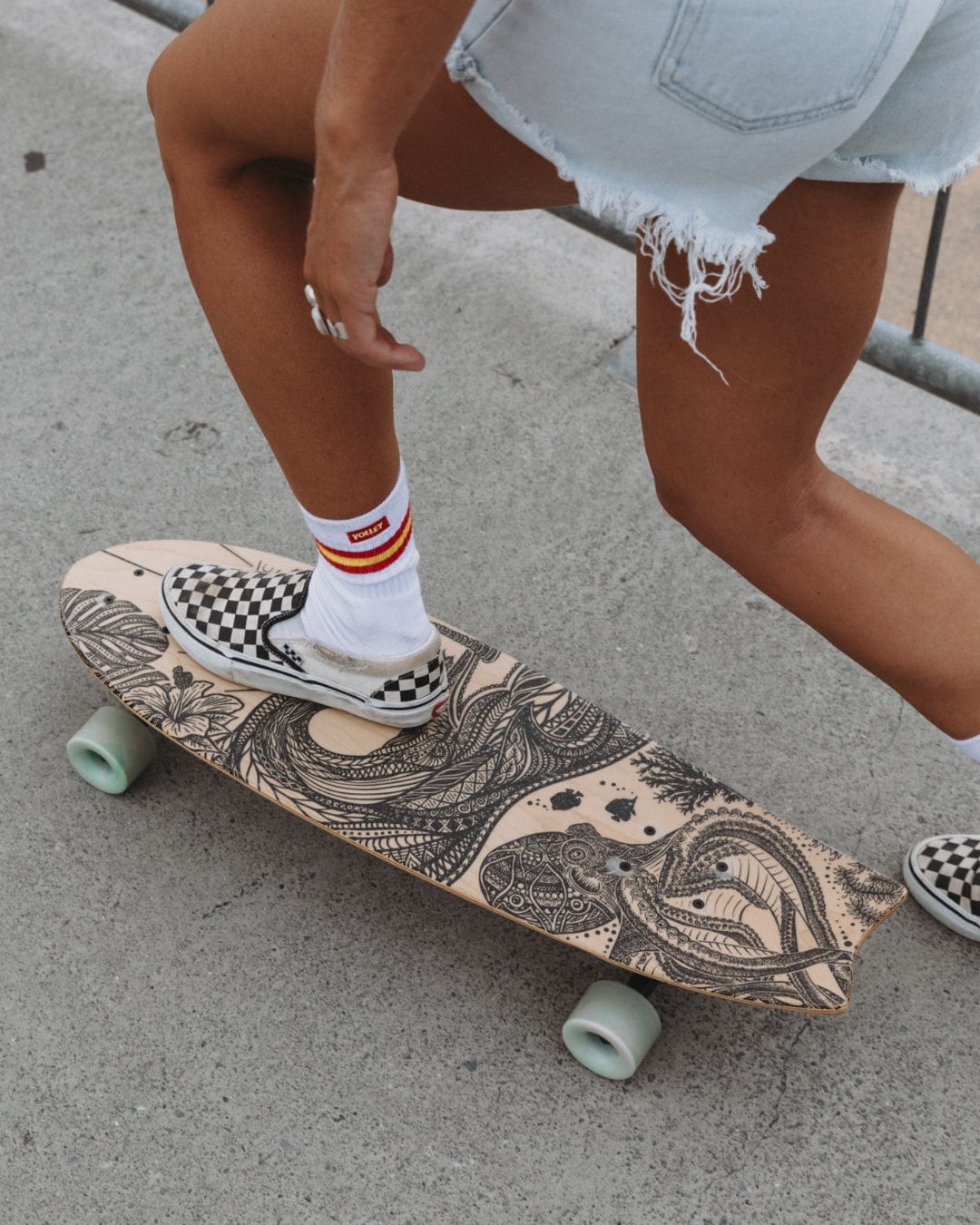
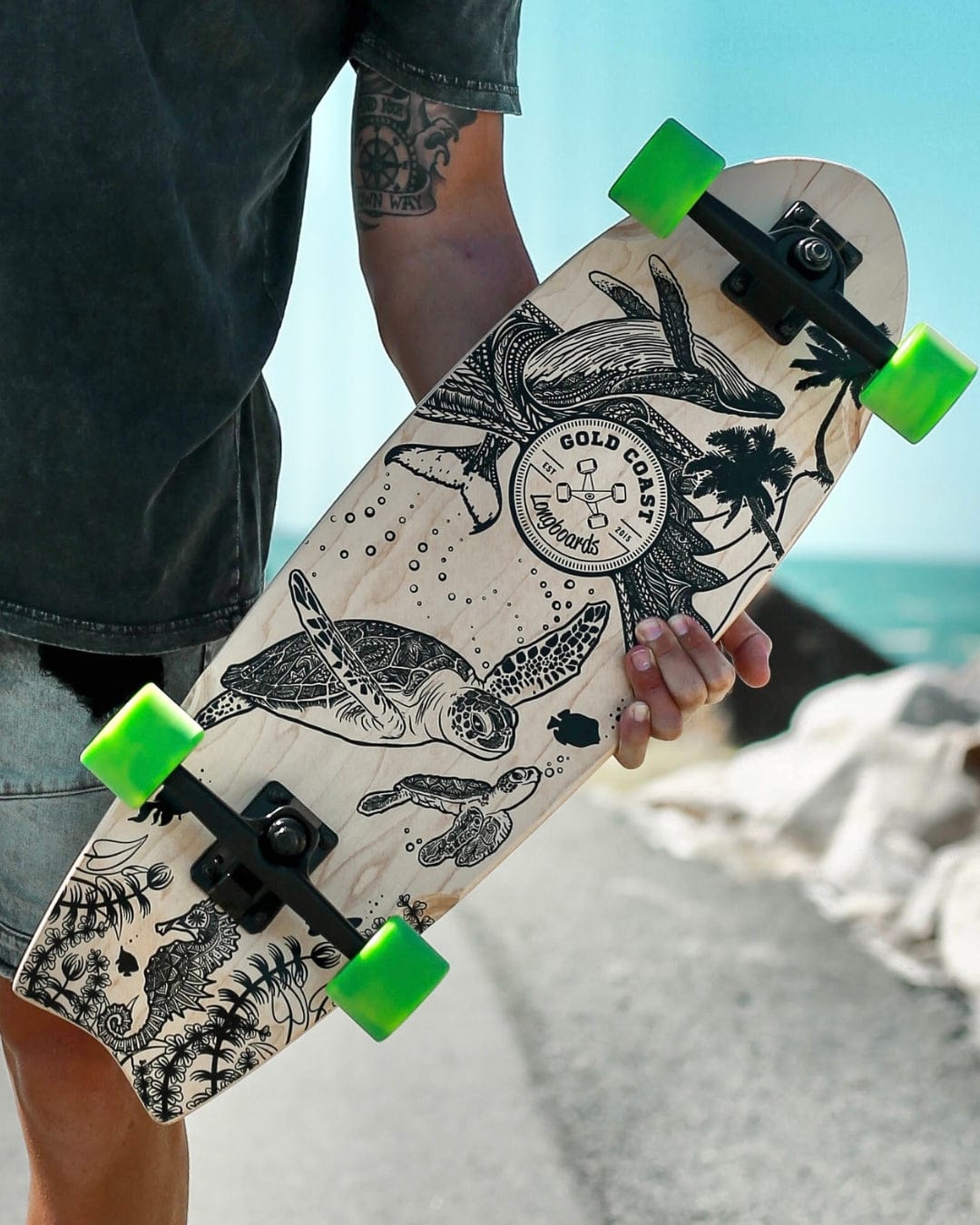
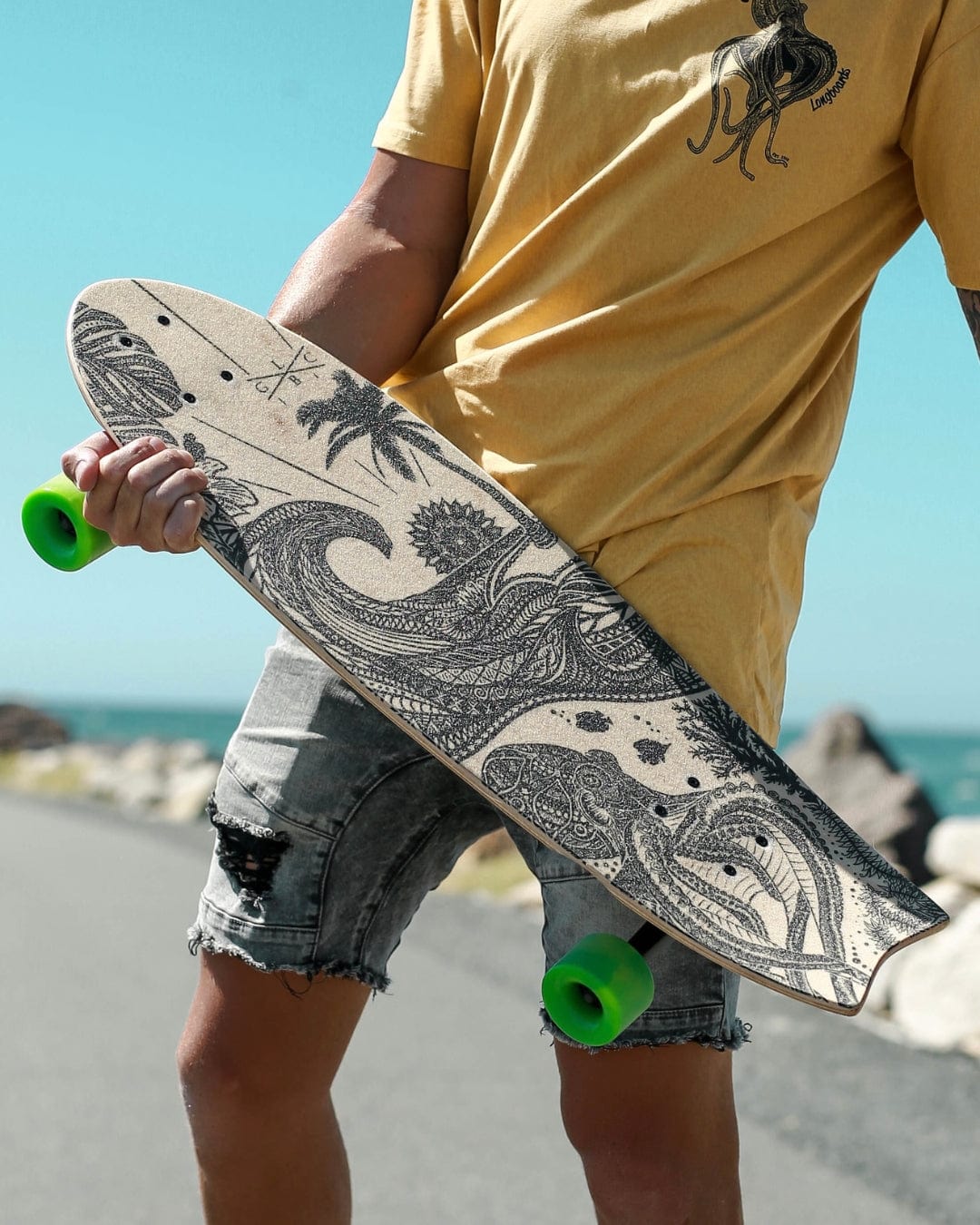
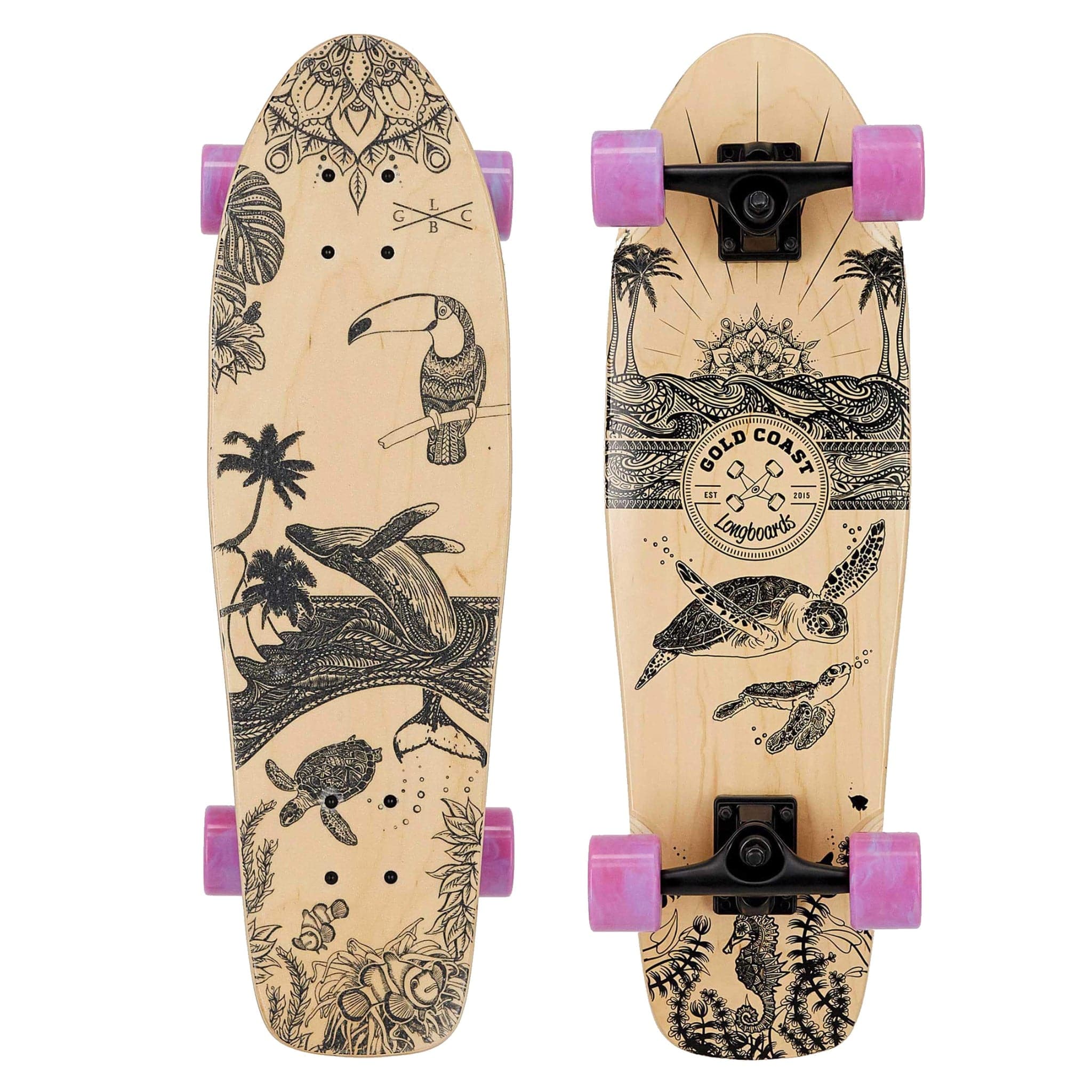
Header artwork created with AI using GCLB product photography. The inline photograph is the original product image, resized for this guide.